
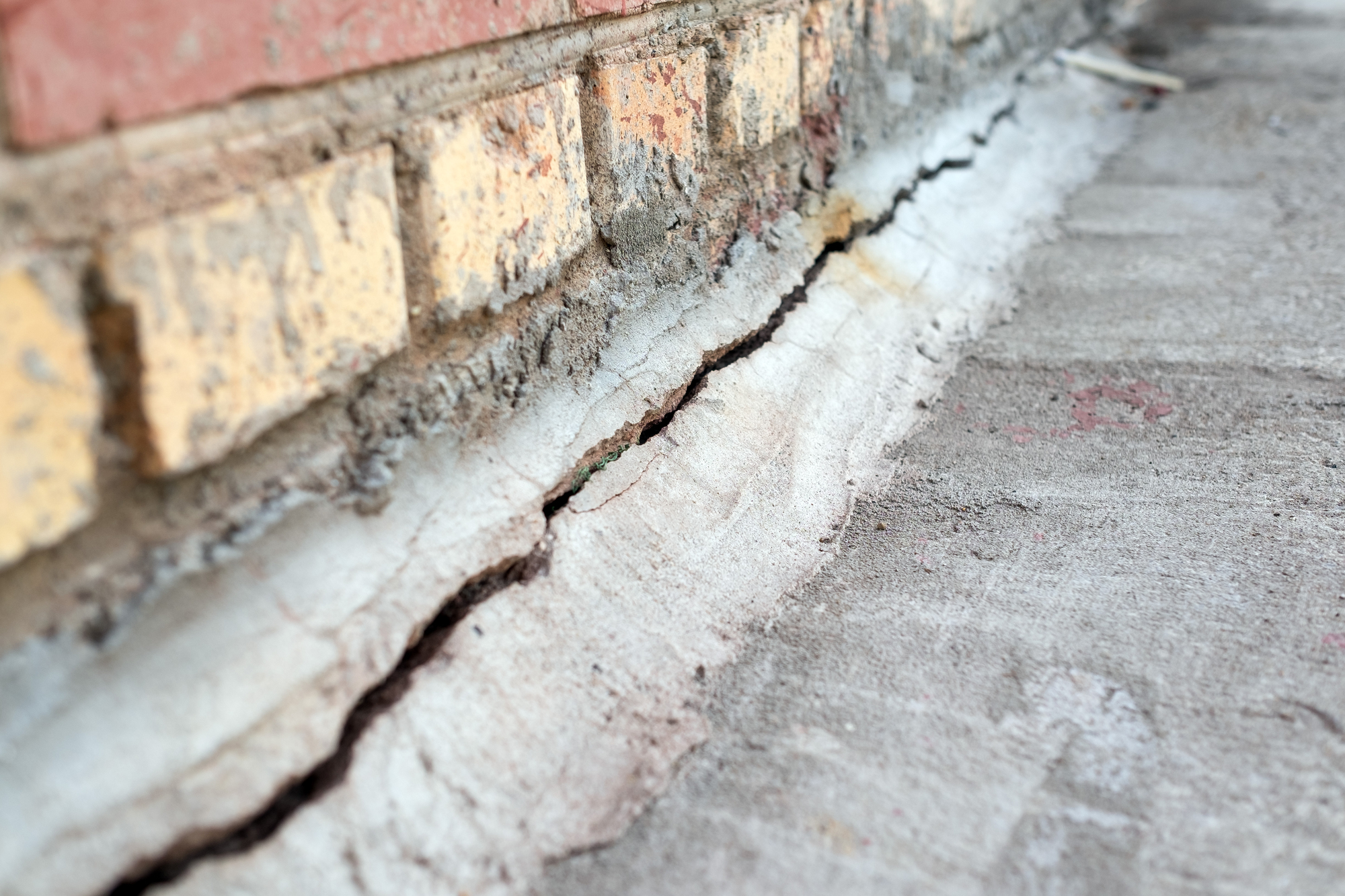
When you discover a crack in your home’s foundation, it can range from a minor issue to a major structural concern. At Cornerstone Foundation Repair, we understand homeowners’ concerns about foundation repairs and the costs that can be associated with them. Our team is here to give you the knowledge you need about different types of foundation cracks and what they can mean for your home’s structural integrity. We’ll take a closer look at different types of foundation cracks, what they mean, and when you should have your home’s foundation cracks inspected and repaired by professionals like our team.
What is Causing Cracks in My Foundation?
The foundation is the bedrock of your home, supporting significant weight and distributing it evenly into the ground. Over time, foundations can settle unevenly and be exposed to moisture and freeze-thaw cycles, all of which can lead to cracks. Concrete can also develop minor, nonstructural cracks during curing, which is why it’s important to distinguish normal cracks from structural damage. Next, we’ll take a closer look at some specific types of cracks, what they can mean, and when you should have our team come out for an inspection of your foundation.
Hairline Foundation Crack
Typically, hairline foundation cracks are the least structurally significant type of cracks you’ll notice in foundations. Most of the time, hairline cracks develop during the concrete curing process and remain unchanged once the concrete has fully cured. However, while hairline cracks are typically non-significant, they should be monitored to ensure they don’t start to grow, expand, or allow water into your basement.
Vertical Foundation Cracks
Vertical foundation cracks are another common type of crack in foundations. These cracks can be caused by uneven foundation settling or as part of the natural concrete curing process. Vertical foundation cracks are more concerning when they start to widen, grow, and allow water into your foundation. If uneven settling is causing vertical foundation cracks in your home, you may also notice that doors and windows stick when you open or shut them, as well as uneven floorboards. Our team highly recommends having vertical foundation cracks inspected by the pros, especially if your home is showing other signs of uneven settling.
Horizontal Foundation Cracks
Horizontal foundation cracks are a cause for concern, as they often indicate that inward pressure is pushing on a foundation wall. This can be from hydrostatic pressure or the expansion of water from freeze-thaw cycles. If a horizontal crack is accompanied by inward bowing of a foundation wall, simply sealing the crack won’t be enough; you must address the underlying cause as well. If hydrostatic pressure is damaging your foundation, our team can reduce it with waterproofing and water mitigation systems.
How the Width of Foundation Cracks Can Assess Risk
One of the best and easiest ways for homeowners to assess the risk associated with foundation cracks is by looking at the width of foundation cracks. A narrow hairline foundation crack that has remained unchanged for several years is much less likely to be structurally significant than a crack that continues to widen and expand. If you have concerns about any new or existing cracks in your foundation, our team can inspect your foundation and recommend affordable solutions to keep it structurally sound and water-free.
Professional Foundation Crack Inspections From Cornerstone Foundation Repair
At Cornerstone Foundation Repair, our team understands the worries and concerns homeowners have when they notice cracks in their foundation. If you’ve noticed new or existing cracks in your foundation that concern you, give our team a call today at (844) 926-7637 for a foundation inspection.


 (844) 926-7637
 office@cfr-NC.com
 www.cfr-nc.com